.png?width=400&height=100&name=Untitled%20design%20(21).png)
ORC Civil Recovery: What Retailers Are Entitled to Recover and How to Get It
 By
By
An organized retail crime (ORC) arrest is not the end of the recovery process. For most retailers, it is the moment the civil recovery process begins, but it’s also the moment too many recovery programs go quiet.
Criminal prosecution runs on the state’s timeline, toward the state’s outcome. The retailer is just a victim of record. What the criminal process recovers, if anything, is rarely the full picture. Civil recovery operates on a separate track, under separate statutes, with separate filing requirements and separate timelines. It pursues the financial losses that criminal proceedings leave on the table.
Read on to learn about what ORC civil recovery is, what retailers are legally entitled to recover, how the process works, and what it takes to see a case through.
What is ORC civil recovery?
ORC civil recovery is the legal mechanism by which a retailer pursues financial restitution from the individuals responsible for organized retail theft, independent of any criminal prosecution. It is a right established under state civil statutes, available to retailers whether or not a criminal conviction is ever secured.
Organized retail crime is the professional theft of merchandise at scale, carried out by coordinated networks rather than individual opportunistic shoplifters. ORC rings typically involve multiple roles: boosters who steal merchandise, fences who receive and resell it, and organizers who direct operations across locations and jurisdictions. Each participant in the ring is a potential civil defendant. Each civil filing is a separate legal action.
That structure is what makes ORC civil recovery fundamentally different from standard civil demand. A standard civil demand is a notice letter, issued to an individual shoplifter after a single-incident theft, triggering a statutory payment or written-off. ORC civil recovery involves active legal management: identifying viable defendants, filing in the correct jurisdictions, engaging directly with courts and opposing counsel, and pursuing collection through the full statutory window. Volume processing cannot handle it, but a dedicated civil recovery law firm can.
What can retailers recover through civil action vs. criminal prosecution after an ORC arrest?
When law enforcement makes an arrest in an ORC case, most loss prevention teams shift focus. The case is handed off, the criminal process begins, and recovery expectations get tied to whatever the court eventually orders. That wait is often long, and the outcome is often incomplete.
Criminal restitution, when ordered, is determined by the court in a criminal proceeding. It is calculated against a narrow set of provable losses, paid on the defendant’s timeline, and frequently shared across multiple victims. Plea agreements may reduce the dollar figure substantially. Multi-defendant cases may produce restitution orders that individual defendants cannot or do not pay. For large-scale ORC incidents, criminal restitution is a floor, not a ceiling.
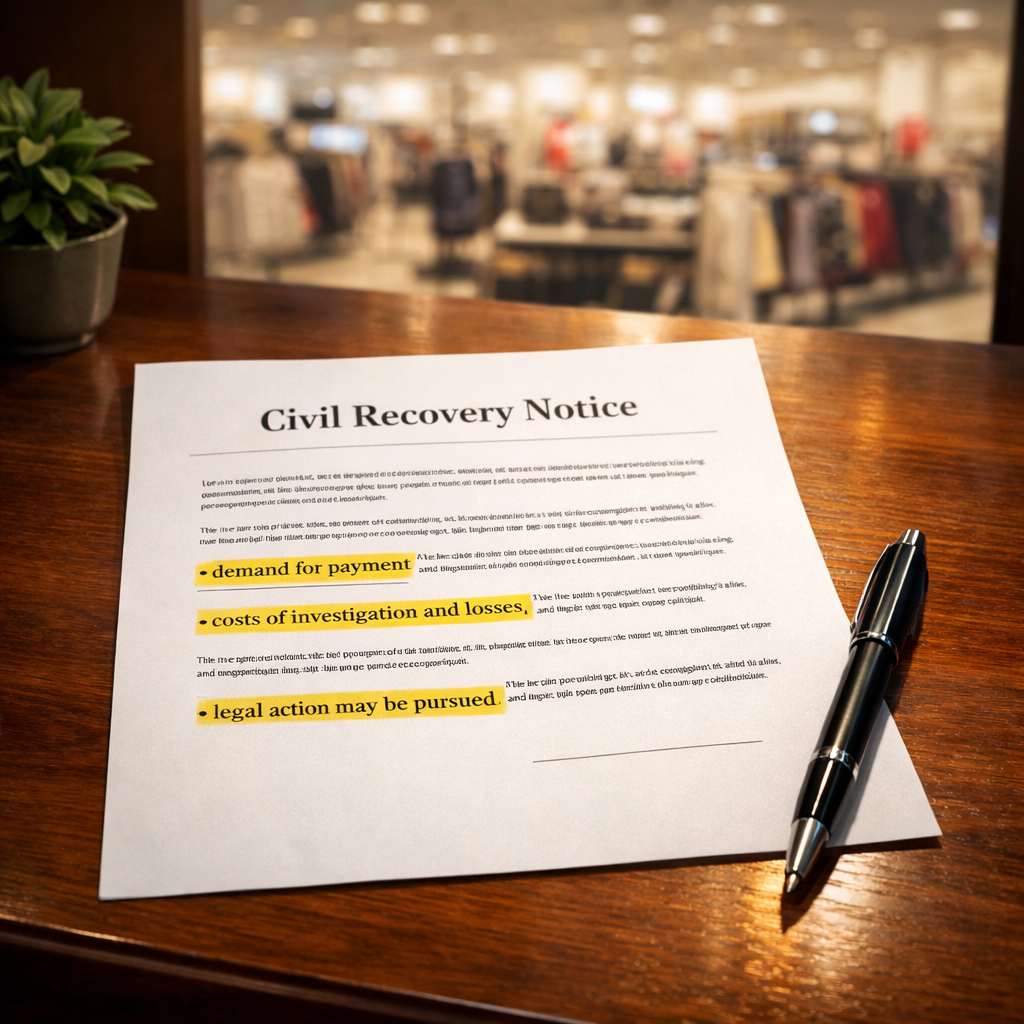
Civil recovery operates above that floor. Under state civil recovery statutes, retailers can pursue defendants for the actual value of merchandise stolen, for the cost of investigating the theft in many jurisdictions, for civil penalties beyond the value of stolen goods, and for attorney’s fees in certain states. In an ORC ring with ten defendants, that means up to ten separate civil recovery filings, each pursuing amounts that criminal restitution may not have reached.
The civil track does not wait on the criminal process, and civil recovery is often pursued in parallel with open criminal proceedings and after their conclusion.
How does civil recovery against an ORC ring work?
ORC civil recovery is a legal process, rather than purely an administrative one. It requires case-by-case legal analysis, jurisdiction-by-jurisdiction filing, and sustained pursuit over a timeline that most in-house Loss Prevention teams cannot maintain. Here is what to expect from the process, from intake to collection.
Case Analysis and Defendant Identification
Civil recovery in an ORC case begins with mapping the recoverable defendants. An ORC ring may have a dozen participants with varying degrees of legal exposure. At PRA Law Firm, our legal team reviews arrest records, investigation documentation, and case evidence to identify which subjects have viable civil recovery profiles, taking into account jurisdiction, defendant assets, and the strength of the evidentiary record for each individual.
This analysis determines the filing strategy. Pursuing every name on an arrest report without qualification produces noise, but identifying the defendants with both legal exposure and recoverable assets produces results.
Multi-Party Filing Across Jurisdictions
ORC rings operate across jurisdictions. A single operation may have members arrested in three states, merchandise recovered in two, and criminal proceedings active in four courts simultaneously. Civil recovery filings need to happen in the courts with jurisdiction over each defendant, which may mean a different state or county for every individual in the ring.
PRA’s nationwide network of Of-Counsel attorneys makes that possible without the retailer managing a web of outside firms across multiple markets. Depending on the case specifics, one engagement with PRA can produce filings wherever the defendants are located.
Direct Engagement with Courts, Defendants, and Opposing Counsel
Civil recovery in ORC cases does not stop at demand letters. When working an ORC case, our legal team engages directly with courts, responds to defendant attorneys, negotiates settlements where appropriate, and pursues court-ordered restitution where warranted. The retailer’s Loss Prevention team receives recoveries and reporting, not case management tasks.
Loss Prevention teams managing recovery correspondence in-house spend time on legal communication that requires attorney oversight, which is time that pulls resources from active prevention work.
Aged and Stalled ORC Cases
Many ORC civil recovery cases go uncollected because they age out of active management: the criminal case drags on for years, the original demand goes unanswered, or the case moves between LP team members and loses its paper trail. Eventually, the losses get written off and as just a cost of doing business.
At PRA Law Firm, we pursue aged ORC cases through the same process as active ones. Time since the incident does not disqualify a case. What matters is where the case stands within the applicable statute of limitations and whether viable defendants can still be identified and reached.
ORC civil recovery vs. shoplifting civil demand: why your approach must change
High-volume civil demand processing works for opportunistic shoplifting because the case structure is consistent: one incident, one offender, one jurisdiction, one statutory demand. The retailer sends the notice, the offender pays or doesn’t, the case closes. It is a volume operation because the cases are structurally identical.
ORC is a different category of case. The offender is part of an organization. The incident is one data point in a pattern. The losses are not confined to a single store visit, and the defendants are not confined to a single jurisdiction. Filing a standard civil demand notice against a booster in an ORC ring is not enough, and is merely a procedural step that captures a fraction of what is legally recoverable.
Effective ORC civil recovery does more. It requires legal analysis of each defendant’s role and exposure, multi-jurisdiction filing strategy, active pursuit through courts and opposing counsel, and persistence over a timeline that extends well past the initial incident. LP teams directing their ORC cases to the same vendor that handles their shoplifting volume are not running an ORC civil recovery program. They are running a notice program against a small number of ORC defendants and leaving the rest of the recovery on the table.
What happens when an ORC case crosses multiple jurisdictions?
Jurisdiction in civil recovery is determined by where the defendant is located or where the incident occurred, not where the retailer’s headquarters is, and not where the criminal case is being prosecuted. An ORC ring with members operating across five states may generate civil recovery filings in five different court systems, each with its own statutes, filing requirements, and timelines.
Managing that complexity in-house requires attorney relationships in every market where defendants are located. For a national retailer encountering ORC across its store footprint, that is not a realistic operational model. The typical result is that recovery is pursued in a handful of familiar jurisdictions and abandoned in the rest.
If a case involves defendants in multiple states, PRA identifies the appropriate courts, engages local counsel through its established network, and coordinates filings across jurisdictions under a single point of contact for the retailer.
Multi-jurisdiction ORC cases are where the capability gap between a civil recovery law firm and a civil demand processor is most visible. Processing firms send demand letters. Law firms file in courts. When an ORC ring is spread across eight states, the difference between those two approaches is the difference between a notice program and an actual recovery.
How long does ORC civil recovery take?
ORC civil recovery timelines are shaped by four variables: the number of defendants, the status of any parallel criminal proceedings, the jurisdiction, and how quickly defendants respond or retain counsel. There is no single answer, and any firm that gives you one without knowing your case is guessing.
What can be stated clearly: civil recovery does not require a criminal conviction to proceed, and it does not pause while criminal proceedings are active. A case where criminal prosecution has been running for two years is not a case that has been waiting two years for civil action.
Cases where criminal proceedings have concluded, particularly those resolved through plea agreements that produced limited restitution, often move faster on the civil side because the factual record is established. Cases with active criminal proceedings may involve coordination with criminal counsel to ensure the civil process does not interfere with the prosecution.
Aged ORC cases that sat uncollected for a year or more are evaluated individually against the applicable statute of limitations in each relevant jurisdiction. Age is a factor, but it is rarely a disqualifier.
What does a civil recovery law firm do in ORC cases?
The civil recovery process after an ORC arrest is a legal process. It requires licensed attorneys, jurisdiction-specific knowledge, court filings, and active engagement with defendants and their counsel over a timeline that extends well past the initial incident. It is not a process that scales from a shoplifting notice program, and it is not a process that can be managed effectively as a secondary responsibility within an LP team already stretched across active case work.
The question most LP directors face is a resource allocation question: the organization has a legal right to recover these losses, the cases are technically pursuable, and the amounts at stake are meaningful. The barrier is capacity: the attorney relationships, the multi-jurisdiction infrastructure, the persistence to follow cases through aged status to collection.
PRA’s entire infrastructure is built around civil recovery. Every process, every attorney relationship, every client workflow exists to move cases from incident to collection. ORC cases are the most demanding cases in the recovery caseload, but they are also the cases where the gap between what is recovered and what is legally recoverable is widest.